


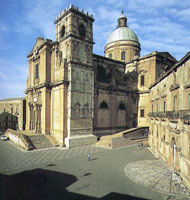
The Cathedral
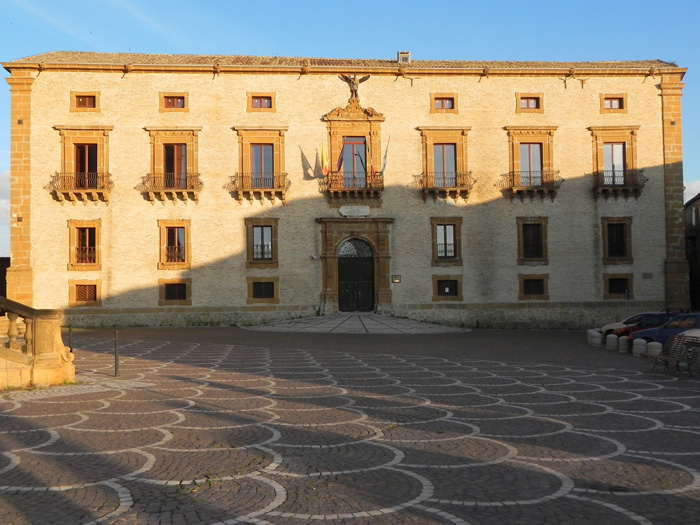
Palazzo Trigona
Castello Aragonese
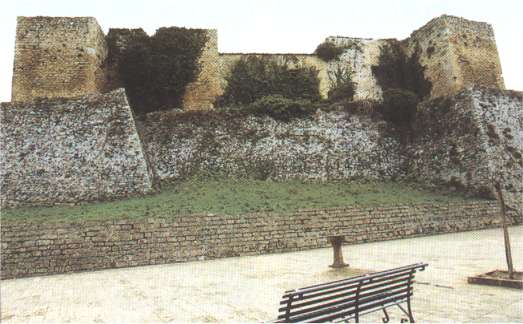 Rude Castle whose current building dates from the late 14th century. Since, at that time,
King Martin ordered the transformation into stronghold of an ancient "cenobio" of the Franciscan convent which was given
in Exchange for a pre-existing Norman castle, not deemed most suitable to the defense and which more nothing survives. Within t
he walls of the new building remained in Franciscan church dei Franciscan fathers where it is still celebrated the mass for the detainees.
In 1396 King ' Martin ' the castle to check Giovanni Suriano, prior of St. Andrea.In under King Alfonso, (CA. 1416), castellano was Alfonso de Cardines
whose heirs because he was "invested in fief of the property of the Castle" established him with their militias and part of it to patrol the jail.
On 1812 Finally, with the abolition of "chatellenies", the old manor passed to State property was completely transformed into a prison.
Between the time of King Alfonso and the 1812 anything of it is handed down to us, and we must always assume ownership of Cardinespoiche ' in 1876,
with the Court's judgment was granted the property to the heirs of the family.They, riavutolo in possession, the rented to the Government that he continued
to start a judicial prison.Massive in its large and low, with a structure against which hugs the wall base and on all qualecorre a walkway,
the Castle experienced the pomp of the Court of King ' Martin and the young Queen Mary, who dwelt at length and at that time of continuous struggles "baronial"
here summoned the rebels of caltagirone augusto aiquali gave their pardon. Even then it often gave the Conference representatives of the highest Sicilian nobility.
Rude Castle whose current building dates from the late 14th century. Since, at that time,
King Martin ordered the transformation into stronghold of an ancient "cenobio" of the Franciscan convent which was given
in Exchange for a pre-existing Norman castle, not deemed most suitable to the defense and which more nothing survives. Within t
he walls of the new building remained in Franciscan church dei Franciscan fathers where it is still celebrated the mass for the detainees.
In 1396 King ' Martin ' the castle to check Giovanni Suriano, prior of St. Andrea.In under King Alfonso, (CA. 1416), castellano was Alfonso de Cardines
whose heirs because he was "invested in fief of the property of the Castle" established him with their militias and part of it to patrol the jail.
On 1812 Finally, with the abolition of "chatellenies", the old manor passed to State property was completely transformed into a prison.
Between the time of King Alfonso and the 1812 anything of it is handed down to us, and we must always assume ownership of Cardinespoiche ' in 1876,
with the Court's judgment was granted the property to the heirs of the family.They, riavutolo in possession, the rented to the Government that he continued
to start a judicial prison.Massive in its large and low, with a structure against which hugs the wall base and on all qualecorre a walkway,
the Castle experienced the pomp of the Court of King ' Martin and the young Queen Mary, who dwelt at length and at that time of continuous struggles "baronial"
here summoned the rebels of caltagirone augusto aiquali gave their pardon. Even then it often gave the Conference representatives of the highest Sicilian nobility.
Pinacoteca comunale
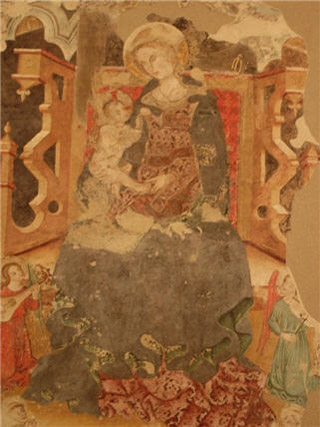
when he moved to Town, was transformed into a male elementary school and kindergarten.Jobs, initiated in 2002 were completed in 2011. The art gallery contains works of art owned by the municipality, including some donated by benefactors on the occasion of citizens ' setting, and works by other properties offered in loan for use to the municipality to ensure their full social fruition.
Villa Romana del Casale, Morgantina,Caltagirone
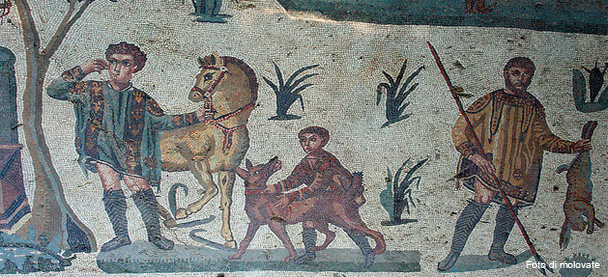 The Villa Romana del Casale, residential dwelling of the late antique era,
lived, since its construction, a direct and intense relationship with the landscape that surrounds it, sensitive to climatic conditions, respect, this,
clearly outlined in some mosaic, iconography related to classical culture, crossing particular environments. The theme of the cyclicity of natural time,
his ties to agricultural production, is dealt with through the use of mythological tales related to the theme of metamorphosis, and allegorical figures,
identified in "Seasons". Both report to the regenerative power of nature and its action of birth and rebirth, so intrinsically linked to territorial identity
of the Sicilian countryside, through the myth of Demeter and Kore.
The Villa Romana del Casale, residential dwelling of the late antique era,
lived, since its construction, a direct and intense relationship with the landscape that surrounds it, sensitive to climatic conditions, respect, this,
clearly outlined in some mosaic, iconography related to classical culture, crossing particular environments. The theme of the cyclicity of natural time,
his ties to agricultural production, is dealt with through the use of mythological tales related to the theme of metamorphosis, and allegorical figures,
identified in "Seasons". Both report to the regenerative power of nature and its action of birth and rebirth, so intrinsically linked to territorial identity
of the Sicilian countryside, through the myth of Demeter and Kore.
 Morgantina
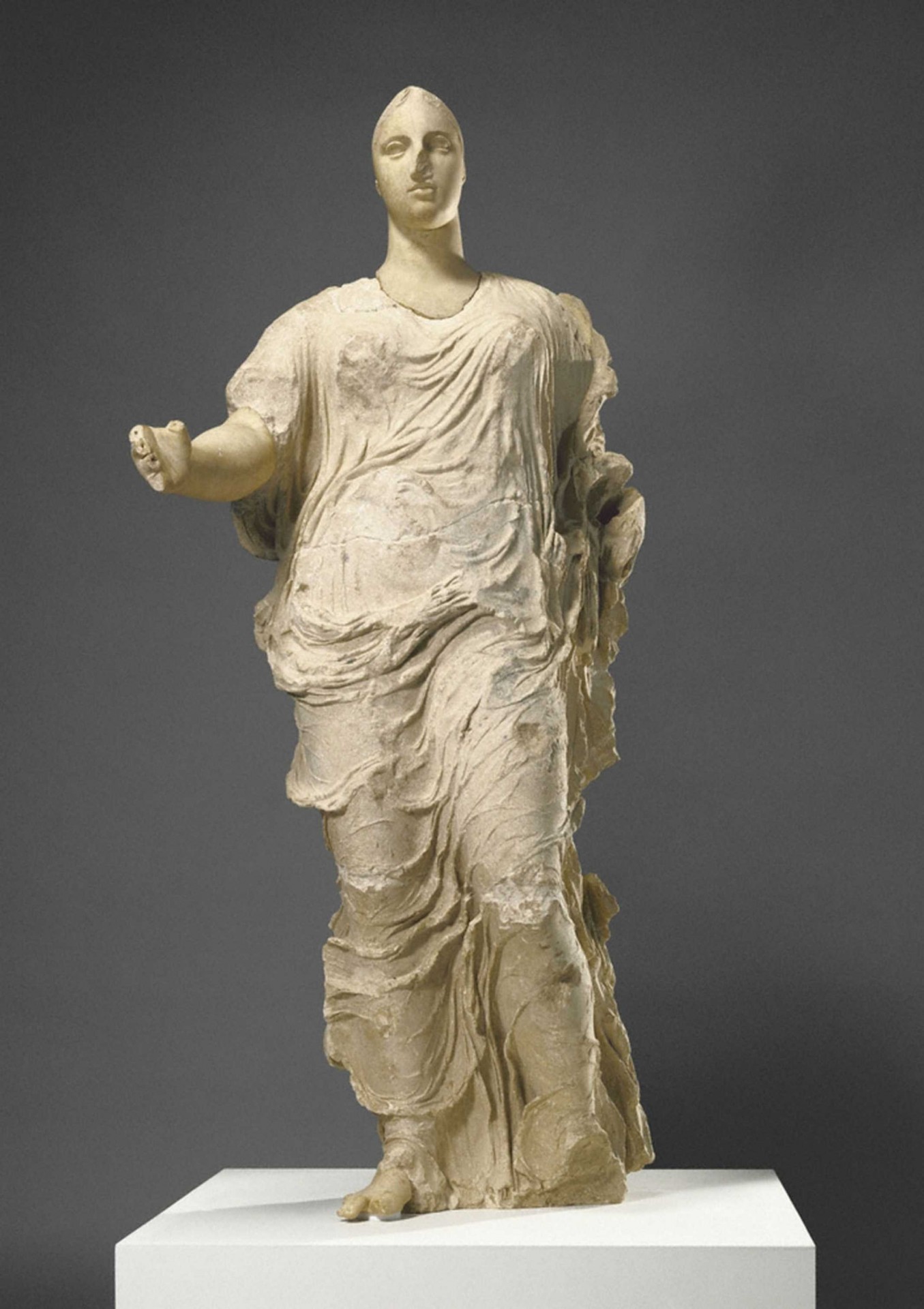
is an ancient city of Sicily and the Greek archaeological site in Aidone, Italian municipality of the province of Enna,
in region of Sicilia.La city was light riportataalla in the autumn of 1955 by the archaeological mission of Princeton University
(United States).The excavations carried out up to now allow you to follow the development of the settlement for a period of almost
a Millennium, from prehistory to the Roman period. The most easily accessible area, fenced off from the Sovraintendenza, retains remains
from the middle of the V at the end of the 1st century BC, the heyday of the city.From this site are important archaeological finds such
as the Venus of Morgantina, currently houses to whom the Aidone archaeological museum where it is now the March 17, 2011 after the dispute
between Italy and United States where it was exhibited at the Getty Museum in Malibu, and the Morgantina treasure, also returned.
Morgantina
is an ancient city of Sicily and the Greek archaeological site in Aidone, Italian municipality of the province of Enna,
in region of Sicilia.La city was light riportataalla in the autumn of 1955 by the archaeological mission of Princeton University
(United States).The excavations carried out up to now allow you to follow the development of the settlement for a period of almost
a Millennium, from prehistory to the Roman period. The most easily accessible area, fenced off from the Sovraintendenza, retains remains
from the middle of the V at the end of the 1st century BC, the heyday of the city.From this site are important archaeological finds such
as the Venus of Morgantina, currently houses to whom the Aidone archaeological museum where it is now the March 17, 2011 after the dispute
between Italy and United States where it was exhibited at the Getty Museum in Malibu, and the Morgantina treasure, also returned.
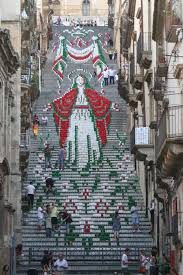 Caltagirone (Cartaggiruni, Caltagiruni o Cattaggiruni in Sicilian)
is a town of Italian 38,799 inhabitants in the province of Catania in Sicily. Located in Central Sicily, at the Centre of Caltagirone,
territory and is famous for the production of pottery, activity developed over the centuries from the time of the ancient Greeks. After a
glorious past that saw her for over two millennia Prime stronghold for Byzantines, Arabs, Normans, genovesie who controlled the two planes
(that of Gela and Catania), today lives a renewed period of Caltagirone developmentthanks mainly to two great resources: the traditional ceramic
production and tourism.Packed with churches, fine eighteenth-century palaces and villas, to the exceptional value of its monumental heritage, its
historical centre and was awarded the title of world heritage site from the UNESCOnel 2002, along with Val di Noto.
Caltagirone (Cartaggiruni, Caltagiruni o Cattaggiruni in Sicilian)
is a town of Italian 38,799 inhabitants in the province of Catania in Sicily. Located in Central Sicily, at the Centre of Caltagirone,
territory and is famous for the production of pottery, activity developed over the centuries from the time of the ancient Greeks. After a
glorious past that saw her for over two millennia Prime stronghold for Byzantines, Arabs, Normans, genovesie who controlled the two planes
(that of Gela and Catania), today lives a renewed period of Caltagirone developmentthanks mainly to two great resources: the traditional ceramic
production and tourism.Packed with churches, fine eighteenth-century palaces and villas, to the exceptional value of its monumental heritage, its
historical centre and was awarded the title of world heritage site from the UNESCOnel 2002, along with Val di Noto.